"Smart Data" in compressor companies
author: xiaolu
2022-12-02
Modern general enterprises tend to stay at the digital level of application more, just the original collection of data, the establishment of a database after shelving. The significant characteristics of the digital economy are the collection, identification, filtering, analysis, transformation, and use of data, and the higher level is the self-healing of data (artificial intelligence-level applications). "Speak with data" - "data can speak" - "data teaches to speak" are the three levels of data economy development.
The "speak with data" level
The most used in product promotion is "using data to speak", such as: a 110KW-8bar (SF1.2) machine, calculated according to the annual operation of 8000h, the first-level energy efficiency (specific power 6.4) product than the second-level energy efficiency (specific power 6.9) product can save about 76,000 degrees; First-level energy efficiency products can save about 170,000 kWh of electricity than third-level energy efficiency (specific power 7.7) products, and the products of energy contract management or product replacement projects will be "hanging the meter" monitoring, and the data is beautiful or not at a glance. "Speaking with data" has become a hard currency in product transactions, and it has also become a bargaining battle.
The "data" of the market end requires to become the input of product design and manufacturing, how to improve product energy efficiency? Various data monitoring during testing, selection of test points, ultimate control of motor and host efficiency, and extreme control of three filters, radiators, pipelines, oil and gas barrels and other extreme control that affect the pressure drop of the system are all necessary work in the process of energy saving. The energy efficiency quality of the terminal is bound to require the pressure transmission of the whole machine manufacturer, and put forward higher requirements for the product quality control of the subordinate supplier.
Production scheduling, purchase requisition, some internal production processes require accurate market demand and forecast data from the sales department, and each link of transmission must use "data to speak". In the product manufacturing process, turnover between various processes, raw material factory testing and other links involving the generation of unqualified products can generate a large amount of data for analysis, which is the data accumulation stage at the level of "speaking with data".
"Data speaks" level
The previous "data pool" harvests a huge amount of discrete data without internal connection, and if it cannot be analyzed, transformed, and used, it will form a "data island". The "IoT" technology pioneered by the server is a typical "data talking" application, which detects all the operating parameters that need to be collected online at all times and establishes an analysis model, which can complete "intelligent" alarm management, service personnel management, work order processing and other work. The system can realize the information management of key businesses such as air compressor operation, spot inspection, repair/maintenance, and overhaul.
The sintering process, which is actually the precursor to steelmaking, mixes iron ore with several other ores for combustion before smelting, so that they are sintered together, and then they can be sent to the blast furnace for smelting. In the sintering workshop, there are many places where compressed air is needed, and the amount of air consumption is also very large, but the main use is the same, that is, it is used for power actuators, such as the cooperative actuator of the ash discharge device. Of course, the power actuator can also use electricity as a power source, but it is not reliable and safe without compressed air. The pressure required for compressed air here is generally
0.5MPa, the quality of compressed air requirements are not high, generally use oil-injected screw air compressor, and do not need to configure after-treatment equipment.
{Steel enterprises from ore to steel smelting through ore sintering, iron making and steelmaking and other major smelting processes, that is, fans and related turbine compressors are required in all the process of steel smelting. }
In a small number of places, if instrument air is needed, a heatless regeneration dryer and an oil removal filter are configured on the branch of the air system pipeline to make the compressed air quality meet the requirements of the instrument air.
In addition, there is compressed air used in purging instruments, because in the sintering workshop, the surrounding environment is poor, there is a lot of dust in the air, for a long time, in some instruments will be full of dust, which requires compressed air to purge, here the compressed air quality requirements are generally 3-6-3, that is, solid particles 3, water content 6, oil content 3.
After the sintering process is completed, the iron ore is transported to the ironmaking blast furnace for smelting. Smelting blast furnace as a project requires a lot of equipment to work together. The work of these devices generally requires air as a power source. The actuators of these equipment, such as pneumatic cylinders, the opening of blast furnace doors and waiting for a series of actions are completed with compressed air.
The pressure requirements for compressed air here are generally 0.5MPa, and the quality requirements for compressed air are also very low, generally 3-6-3, but the amount of air consumption is very large.
For example, a 2500m" ironmaking blast furnace requires four 40m/min screw air compressors, three of which are normally open and one is used as a backup. In addition, the coal ash required for blast furnace combustion is generally transported by compressed air, but the pressure requirement of compressed air here is generally 1.2MPa, and the amount of compressed air is also quite large, and the quality of compressed air is not high. At this time, the exhaust pressure of the compressor should be at least 1.3MPa or above.
The blast equipment of the blast furnace generally adopts high-pressure fans and turbine compressors, usually with a pressure of 0.2MPa. The compressed air consumption of these compressed air is very large, and does not require any aftertreatment equipment configuration. In addition, a small part of the compressed air needs to be processed by aftertreatment equipment for the instrumentation air system and the instrument's purge system. The quality level of these compressed air is the same as described earlier.
Second, the use of turbine compressors and fans Steel enterprises from ore to steel smelting through ore sintering, iron making and steelmaking and other major smelting processes, that is, fans and related turbine compressors are required in all the process of iron and steel smelting. Although there are many types of turbine machinery and equipment used, they are relatively difficult, and can represent their design and manufacturing level can be divided into three types, namely axial flow compressors, sintered induced draft fans and blast furnace gas residual pressure recovery turbine power generation devices. The above three kinds of fans, generally speaking, domestic products and technologies are imported from abroad, and have replaced imported brand products in steel mills from following to now.
1. Axial compressor
Axial compressors are characterized by high efficiency, large capacity and wide performance adjustment range. At present, blast furnaces above 1000m at home and abroad adopt axial flow compressors. As an axial compressor for blast furnace blast air, its flow rate has reached more than 10,000m°/min, the pressure has reached 0.69MPa, and the power has reached 70,000kW.
The main manufacturers of axial compressors at home and abroad are Sulzer of Switzerland, MANGHH of Germany, Mitsubishi Heavy Industries Co., Ltd., Kawasaki Heavy Industries Co., Ltd. and the United States
Ott Company, DRESER-RAND Company, Shaanxi Drum and other enterprises. In recent years, the share of Shaanxi drum has gradually increased, and its advantages have become more and more prominent.
The axial flow compressor has good aerodynamic performance (the variable efficiency of the whole machine is 87%~91%, and the maximum flow and minimum flow can be adjusted by more than 1 times), as well as the advanced height three-way level and electronic control system. Its structural characteristics are: the casing is horizontally split, made of gray cast iron (or cast steel), and the pressure value of the exhaust side design can reach 0.7~
1.2MPa, the rotor is equal inner diameter type, multi-stage knot-disc structure, and the moving and static blades are advanced blade types. The flow range of the compressor with full static vane adjustable structure can be expanded by 1 times compared to the fixed static vane type compressor, which also makes the flow range of the axial flow-centrifugal composite isothermal compressor 1400~7500m/min, and the pressure ratio is 7~11.
In recent years, in order to improve the efficiency of axial flow compressors, related companies have adopted the hybrid reactionary degree design method to improve interstage matching. Reducing the gap between the vane top and the casing also improves compressor performance and efficiency. In terms of reducing the noise of axial compressors, foreign countries are mostly placed on sound insulation and sound muffling, and the measures are:(1) using thickened casting casings to reduce noise scattering; (2) using sound insulation covers and mufflers to reduce noise diffusion.
Using the electronic computer as the central command system for regulation, the adjustment automation of the axial flow compressor can be realized and the operation is reliable.
2. Sintered induced draft fan
As the main smoke extractor equipped with the sintering machine, the power consumption of the sintering induced draft fan accounts for more than 50% of the total power consumption of the sintering plant. And because the medium transported is sintered flue gas, the amount of dust will be large, therefore, the rate is increased, energy consumption is reduced, wear measures are strengthened, and the service life is improved, which is still sintered induced draft fan
Major technical issues.
The air volume of the sintering induced draft fan depends on the sintering area of the sintering machine; The pressure depends on the thickness of the sintered layer. The large-scale sintering machine (which can already produce a sintering machine of 1000m' and the thick material layer (which has reached 700mm) have promoted the development of sintering induced draft fans in the direction of large air volume and high negative pressure. The maximum flow rate of the sintered induced draft fan is 40000m/min, the maximum pressure is 19620Pa, and the maximum power is 14500kW. Due to the limitations of manufacturing process conditions and transportation conditions, the sintering induced draft fan supporting the extra large sintering machine often adopts the form of double parallel connection.
Wear measures for sintered induced draft fans:
(1) The zigzag middle disc can not only improve the impeller outlet airflow distribution and reduce GD2, but also avoid the scouring of the middle disc by flue gas;
(2) The blade is equipped with a replaceable wear-resistant liner (tungsten carbide overlay welding on the surface of the liner);
(3) The middle disc is protected from wear by a replaceable cone disc; (4) The casing is equipped with a vortex liner and a side liner;
(5) Surface coating coated ceramic anti-wear coating, coating resin, quartz powder water-added glass and other coatings;
(6) Surface strengthening treatment: surface surfacing welding, thermal spraying, boronizing, laser case hardening and high-frequency quenching, etc.
At present, the research on two-phase flow (solid particles and sintered flue gas) calculated by the pneumatic design of sintered induced draft fans by domestic and foreign enterprises attempts to further solve the wear problem of sintered induced draft fans from the aerodynamic aspect.
3. Blast furnace gas residual pressure recovery turbine power generation device (TRT) Blast furnace gas residual pressure recovery turbine power generation device (TopGasPressure Recovery Turbine TRT device for short) is an energy recovery device that uses the pressure of the gas on the roof of the blast furnace to do work through turbine expansion to drive the generator to generate electricity. The TRT unit not only recovers the energy released by the original pressure reducing valve (about 30% of the energy required by the blast furnace blower), but also purifies the gas and improves the quality of pressure control on the roof of the blast furnace. With the development of blast furnaces to large-scale and high-pressure furnace roofs, TRT devices at home and abroad have developed in the direction of dry, axial flow and static vane adjustable. The technology was first introduced from Japan in China, and has been vigorously developed in steel enterprises, and the representative enterprises are Shaanxi Drum and Chengfa.
Axial flow type turbine rotor is generally 2 or 3 grades, mostly using a blade type with a reaction degree of 50%, and the moving blades are made of SUS630 stainless steel with corrosion resistance and fatigue strength. The casing is welded with steel plates, which can also be made of high-strength cast iron, generally radial intake and axial exhaust (lower radial exhaust can also be used). Shaft seals generally use nitrogen seals, and more recently, non-contact mechanical seals are also used.
Most of the axial flow TRT devices at home and abroad adopt the static vane angle adjustment method to expand the working range, which is conducive to reducing noise, improving the reliability of the expansion turbine, and will not affect the fluctuation of blast furnace pressure.
For example, the TP series produced by a domestic manufacturer, performance range: flow rate 1360~1916m³/h, pressure 2.03~
2.5kPa (import), 1.09~1.153kPa (outlet), power 2770kW, speed 3000r/min.
The following products are traditional fans and turbine compressors for steel companies:
1. Sintering fan
The ore used for smelting is sintered before smelting, and the sintering machine is used, and the sintering furnace requires a flue gas main exhaust fan and a cooling fan. For example, a medium-sized steel mill has two ore sintering workshops, a workshop equipped with 5 62.5m sintering machines, and a total of 29 fans are used, of which 18 are used in sintering machines; Another workshop equipped with 3 75m sintering machines uses a total of 90 fans, of which 8 are used in sintering machines, and other fans are used for ventilation, dust removal, cooling and cooling.
The centrifugal blower produced by the fan industry to pump sintered flue gas has dozens of model specifications, such as the product performance parameters of a certain manufacturer: the centrifugal blower that pumps sintered flue gas is the equipment supporting for 18~24m sintering machine. This type of blower head has a single-stage, single-suction and double-support structure, which is directly driven by an electric motor. The cast iron casing is horizontally divided into upper and lower halves, and the lower casing is installed on the left and right cast iron bases. The rotor is composed of carbon steel spindle, low-alloy structural steel welded impeller and shaft sleeve. The bearings are plain bearings.
The main performance parameters of its centrifugal blower: flow rate of 1600m³/min, inlet pressure of 89.73kPa, boost
8.33kPa, speed 1485r/min, power 334kW. The main performance parameters of another model of centrifugal blower: flow rate of 6500m³/min, outlet pressure of 101.31kPa, inlet pressure of 89.05kPa, speed of 1475r/min, power of 1640kW, suitable for 75~90m² sintering machine matching. Its structural characteristics are single-stage double-suction double-support structure, with elastic coupling and electric space
Motivation Direct Link. The horizontal section of the casing is divided into two halves and three axial sections, the left and right sections are the symmetrical structure of the intake chamber with two intake pipes upward, the middle section is a volute with a horizontal outlet pipe in the lower part, and a conical diffuser tube is attached to the outlet pipe mouth.
This type of sintered blower can currently achieve a flow rate of 16000m³/min and a power of more than 5000kW in China.
2. Coke oven gas transmission blower
Coke is the main fuel and reducing agent for smelting steel, and it is also the proppant and loosening agent for the pellets in the blast furnace, and the gas in the coke oven must be pumped out by the fan, part of it is used as the fuel of the coke oven, part of it is pressurized and sent to the steel mill as fuel, and the other part is used for the production of other by-products.
The typical representative product of coke oven gas transmission is the D1250-31 centrifugal blower produced by Shenyang Blower Factory. Its main structural feature is that the unit is composed of motor, gear speed increaser, centrifugal blower, lubrication system and instrument control system. The casing is a horizontally split structure, and there is a horizontal and longitudinal positioning keyway under the bearing housing to maintain good alignment of the body and adapt to the thermal expansion of the casing; The bearing housing is cast as one piece as a single housing, and the stiffness is enhanced for easy disassembly and maintenance.
The rotor is composed of a main shaft, 3 impellers, a partition sleeve, a balance disc and a half coupling; The impeller adopts high-strength alloy steel welded structure. Bearings are divided into two parts: support bearings and thrust bearings. The support bearings are elliptical tile plain bearings and thrust bearings.
It is a Mitchell double-sided thrust plain bearing. The seal is located between stages, impeller inlet, balance disc periphery and shaft ends
Labyrinth Rabel seals. Its main performance parameters: inlet flow is 1250m³/min, inlet pressure 98.07kPa, outlet pressure 313.82kPa, spindle speed 4776r/min, power 3670kW.
3. Blast furnace blower
During the pig iron smelting process, a blast furnace blower must be used to deliver a certain amount of combustible air (or oxygen) to the blast furnace to increase the temperature in the furnace. In addition, it is necessary to send the combustion air to a centrifugal fan in a hot blast furnace.
Oxygen for the steel industry lies in the enhancement of the smelting process. In terms of steelmaking, it is used for oxygen top blowing converter steelmaking, oxygen bottom blowing converter steelmaking, open-hearth furnace pool blowing oxygen steelmaking, electric furnace oxygen steelmaking and so on. In particular, oxygen top-blowing converter steelmaking has become a major way for the rapid development of the steel industry. The amount of oxygen used in steelmaking is very large, and it is obtained by deep freezing from the air using air separation equipment. Each set of oxygen generators must use air compressors, oxygen compressors, heating blowers and turboexpanders, which are generally known as the "four major oxygen generators".
The typical representative products of blast furnace blowers are Shaanxi's drum axial flow compressor A series (static blade not adjustable) and AV series (static blade adjustable). Its main performance parameters: A40~A112, flow range 65~680 (x103Nm³/h), pressure ratio 2.9-7.7, speed 3410~9549r/min, power 33-690 (x102kW). AV40-AV140, flow range 70~1050 (x103Nm/h), pressure ratio
2.7-7.2, speed 2524~8833r/min, power 34-900 (x102kW).
4. Converter secondary flue gas dust removal fan
The converter secondary flue gas dust removal system refers to the flue gas collection and dust removal at each dust point other than the converter flue gas purification and recovery. These include flue gas dust removal from converter to iron, converter blowing, argon blowing station, molten iron slag station and molten iron pouring station.
The fans used for flue gas dust removal mainly include 4-73 type, JY5-44 type and 5-51 type.
Type 4-73 is a universal type, with a total of 12 specifications from No8~28. Its performance range: flow rate 16156~680000m/h, pressure 1400~5423Pa, power 18.5~1250kW, speed 480~1450r/min.
JY5-44 induced draft fan from No16~31.5 a total of 12 specifications, its performance range: flow rate 1893~397000m/h, pressure 1922~10931Pa, power 75~1000kW, speed 580~1450r/min.
5-51 type fan from No8~29.5 a total of 20 specifications (including induced draft fan a total of 40 specifications). The main features of this type of fan are advanced technologies such as adjustable air inlet, high-strength wear-resistant impeller, oil leakage bearing box and articulated axial adjustment door. Its performance range: flow rate 9900~583000m/h, pressure 1468~10095Pa, power 15~1600kW, speed 480~1450r/min.
5. Centrifugal compressor for power pack
At present, the centrifugal compressor for power pack has adopted multiple sets of multi-stage centrifugal compressors (single flow rate 110~550Nm/min, pressure ratio 2~17) instead of the past dual-shaft 4-stage isothermal compressor flow rate 6000~58000Nm/min, outlet pressure 617~666.9kPa, power 650~5100kW, speed 7784~18982r/min.
The main feature of the multistage centrifugal compressor is the overall assembly structure, and one common base for the compressor, gearbox, intermediate gas cooler and lubricating oil system. The inlet is equipped with imported regulating vanes, which is a method to optimize the operating performance of the compressor at non-working points. The inlet regulating blade automatically adjusts according to the actual operation of the site, which can realize the constant pressure output of the compressor outlet in the change of air flow
6. Fan for iron furnace
In addition to the fans required in the steel smelting process, the iron furnaces commonly used in general mechanical foundries (such as cupola furnaces, oil furnaces and pulverized coal furnaces, etc.) need to use blowers (high-pressure ventilators or blowers) to send enough air to fuel combustion.
Its typical representative products are H10-13 and HTD series iron furnace fans.
H10-13 is a high-pressure centrifugal fan, which is designed for the performance required by the cuffed waist cupola, and is suitable for the blower air of the cuffed waist cupola with an iron rate of less than 5t/h. There are No6 and No
6.3, No6.9 and No7.5 a total of 4 specifications, its performance range: flow rate 1690~6980m/h, pressure 8973~15103Pa, power 15~37kW, speed 2940r/min.
HTD series centrifugal blower can be equipped with 0.5, 1, 2,
3, 5, 7, 10 and 15t/h common types of iron furnaces. Its performance range: flow rate 12~300m/h, pressure 6860~27450Pa, power 5.5~185kW, speed 2900~5750r/min.
The "speak with data" level
The most used in product promotion is "using data to speak", such as: a 110KW-8bar (SF1.2) machine, calculated according to the annual operation of 8000h, the first-level energy efficiency (specific power 6.4) product than the second-level energy efficiency (specific power 6.9) product can save about 76,000 degrees; First-level energy efficiency products can save about 170,000 kWh of electricity than third-level energy efficiency (specific power 7.7) products, and the products of energy contract management or product replacement projects will be "hanging the meter" monitoring, and the data is beautiful or not at a glance. "Speaking with data" has become a hard currency in product transactions, and it has also become a bargaining battle.
The "data" of the market end requires to become the input of product design and manufacturing, how to improve product energy efficiency? Various data monitoring during testing, selection of test points, ultimate control of motor and host efficiency, and extreme control of three filters, radiators, pipelines, oil and gas barrels and other extreme control that affect the pressure drop of the system are all necessary work in the process of energy saving. The energy efficiency quality of the terminal is bound to require the pressure transmission of the whole machine manufacturer, and put forward higher requirements for the product quality control of the subordinate supplier.
Production scheduling, purchase requisition, some internal production processes require accurate market demand and forecast data from the sales department, and each link of transmission must use "data to speak". In the product manufacturing process, turnover between various processes, raw material factory testing and other links involving the generation of unqualified products can generate a large amount of data for analysis, which is the data accumulation stage at the level of "speaking with data".
"Data speaks" level
The previous "data pool" harvests a huge amount of discrete data without internal connection, and if it cannot be analyzed, transformed, and used, it will form a "data island". The "IoT" technology pioneered by the server is a typical "data talking" application, which detects all the operating parameters that need to be collected online at all times and establishes an analysis model, which can complete "intelligent" alarm management, service personnel management, work order processing and other work. The system can realize the information management of key businesses such as air compressor operation, spot inspection, repair/maintenance, and overhaul.
The sintering process, which is actually the precursor to steelmaking, mixes iron ore with several other ores for combustion before smelting, so that they are sintered together, and then they can be sent to the blast furnace for smelting. In the sintering workshop, there are many places where compressed air is needed, and the amount of air consumption is also very large, but the main use is the same, that is, it is used for power actuators, such as the cooperative actuator of the ash discharge device. Of course, the power actuator can also use electricity as a power source, but it is not reliable and safe without compressed air. The pressure required for compressed air here is generally
0.5MPa, the quality of compressed air requirements are not high, generally use oil-injected screw air compressor, and do not need to configure after-treatment equipment.
{Steel enterprises from ore to steel smelting through ore sintering, iron making and steelmaking and other major smelting processes, that is, fans and related turbine compressors are required in all the process of steel smelting. }
In a small number of places, if instrument air is needed, a heatless regeneration dryer and an oil removal filter are configured on the branch of the air system pipeline to make the compressed air quality meet the requirements of the instrument air.
In addition, there is compressed air used in purging instruments, because in the sintering workshop, the surrounding environment is poor, there is a lot of dust in the air, for a long time, in some instruments will be full of dust, which requires compressed air to purge, here the compressed air quality requirements are generally 3-6-3, that is, solid particles 3, water content 6, oil content 3.
After the sintering process is completed, the iron ore is transported to the ironmaking blast furnace for smelting. Smelting blast furnace as a project requires a lot of equipment to work together. The work of these devices generally requires air as a power source. The actuators of these equipment, such as pneumatic cylinders, the opening of blast furnace doors and waiting for a series of actions are completed with compressed air.
The pressure requirements for compressed air here are generally 0.5MPa, and the quality requirements for compressed air are also very low, generally 3-6-3, but the amount of air consumption is very large.
For example, a 2500m" ironmaking blast furnace requires four 40m/min screw air compressors, three of which are normally open and one is used as a backup. In addition, the coal ash required for blast furnace combustion is generally transported by compressed air, but the pressure requirement of compressed air here is generally 1.2MPa, and the amount of compressed air is also quite large, and the quality of compressed air is not high. At this time, the exhaust pressure of the compressor should be at least 1.3MPa or above.
The blast equipment of the blast furnace generally adopts high-pressure fans and turbine compressors, usually with a pressure of 0.2MPa. The compressed air consumption of these compressed air is very large, and does not require any aftertreatment equipment configuration. In addition, a small part of the compressed air needs to be processed by aftertreatment equipment for the instrumentation air system and the instrument's purge system. The quality level of these compressed air is the same as described earlier.
Second, the use of turbine compressors and fans Steel enterprises from ore to steel smelting through ore sintering, iron making and steelmaking and other major smelting processes, that is, fans and related turbine compressors are required in all the process of iron and steel smelting. Although there are many types of turbine machinery and equipment used, they are relatively difficult, and can represent their design and manufacturing level can be divided into three types, namely axial flow compressors, sintered induced draft fans and blast furnace gas residual pressure recovery turbine power generation devices. The above three kinds of fans, generally speaking, domestic products and technologies are imported from abroad, and have replaced imported brand products in steel mills from following to now.
1. Axial compressor
Axial compressors are characterized by high efficiency, large capacity and wide performance adjustment range. At present, blast furnaces above 1000m at home and abroad adopt axial flow compressors. As an axial compressor for blast furnace blast air, its flow rate has reached more than 10,000m°/min, the pressure has reached 0.69MPa, and the power has reached 70,000kW.
The main manufacturers of axial compressors at home and abroad are Sulzer of Switzerland, MANGHH of Germany, Mitsubishi Heavy Industries Co., Ltd., Kawasaki Heavy Industries Co., Ltd. and the United States
Ott Company, DRESER-RAND Company, Shaanxi Drum and other enterprises. In recent years, the share of Shaanxi drum has gradually increased, and its advantages have become more and more prominent.
The axial flow compressor has good aerodynamic performance (the variable efficiency of the whole machine is 87%~91%, and the maximum flow and minimum flow can be adjusted by more than 1 times), as well as the advanced height three-way level and electronic control system. Its structural characteristics are: the casing is horizontally split, made of gray cast iron (or cast steel), and the pressure value of the exhaust side design can reach 0.7~
1.2MPa, the rotor is equal inner diameter type, multi-stage knot-disc structure, and the moving and static blades are advanced blade types. The flow range of the compressor with full static vane adjustable structure can be expanded by 1 times compared to the fixed static vane type compressor, which also makes the flow range of the axial flow-centrifugal composite isothermal compressor 1400~7500m/min, and the pressure ratio is 7~11.
In recent years, in order to improve the efficiency of axial flow compressors, related companies have adopted the hybrid reactionary degree design method to improve interstage matching. Reducing the gap between the vane top and the casing also improves compressor performance and efficiency. In terms of reducing the noise of axial compressors, foreign countries are mostly placed on sound insulation and sound muffling, and the measures are:(1) using thickened casting casings to reduce noise scattering; (2) using sound insulation covers and mufflers to reduce noise diffusion.
Using the electronic computer as the central command system for regulation, the adjustment automation of the axial flow compressor can be realized and the operation is reliable.
2. Sintered induced draft fan
As the main smoke extractor equipped with the sintering machine, the power consumption of the sintering induced draft fan accounts for more than 50% of the total power consumption of the sintering plant. And because the medium transported is sintered flue gas, the amount of dust will be large, therefore, the rate is increased, energy consumption is reduced, wear measures are strengthened, and the service life is improved, which is still sintered induced draft fan
Major technical issues.
The air volume of the sintering induced draft fan depends on the sintering area of the sintering machine; The pressure depends on the thickness of the sintered layer. The large-scale sintering machine (which can already produce a sintering machine of 1000m' and the thick material layer (which has reached 700mm) have promoted the development of sintering induced draft fans in the direction of large air volume and high negative pressure. The maximum flow rate of the sintered induced draft fan is 40000m/min, the maximum pressure is 19620Pa, and the maximum power is 14500kW. Due to the limitations of manufacturing process conditions and transportation conditions, the sintering induced draft fan supporting the extra large sintering machine often adopts the form of double parallel connection.
Wear measures for sintered induced draft fans:
(1) The zigzag middle disc can not only improve the impeller outlet airflow distribution and reduce GD2, but also avoid the scouring of the middle disc by flue gas;
(2) The blade is equipped with a replaceable wear-resistant liner (tungsten carbide overlay welding on the surface of the liner);
(3) The middle disc is protected from wear by a replaceable cone disc; (4) The casing is equipped with a vortex liner and a side liner;
(5) Surface coating coated ceramic anti-wear coating, coating resin, quartz powder water-added glass and other coatings;
(6) Surface strengthening treatment: surface surfacing welding, thermal spraying, boronizing, laser case hardening and high-frequency quenching, etc.
At present, the research on two-phase flow (solid particles and sintered flue gas) calculated by the pneumatic design of sintered induced draft fans by domestic and foreign enterprises attempts to further solve the wear problem of sintered induced draft fans from the aerodynamic aspect.
3. Blast furnace gas residual pressure recovery turbine power generation device (TRT) Blast furnace gas residual pressure recovery turbine power generation device (TopGasPressure Recovery Turbine TRT device for short) is an energy recovery device that uses the pressure of the gas on the roof of the blast furnace to do work through turbine expansion to drive the generator to generate electricity. The TRT unit not only recovers the energy released by the original pressure reducing valve (about 30% of the energy required by the blast furnace blower), but also purifies the gas and improves the quality of pressure control on the roof of the blast furnace. With the development of blast furnaces to large-scale and high-pressure furnace roofs, TRT devices at home and abroad have developed in the direction of dry, axial flow and static vane adjustable. The technology was first introduced from Japan in China, and has been vigorously developed in steel enterprises, and the representative enterprises are Shaanxi Drum and Chengfa.
Axial flow type turbine rotor is generally 2 or 3 grades, mostly using a blade type with a reaction degree of 50%, and the moving blades are made of SUS630 stainless steel with corrosion resistance and fatigue strength. The casing is welded with steel plates, which can also be made of high-strength cast iron, generally radial intake and axial exhaust (lower radial exhaust can also be used). Shaft seals generally use nitrogen seals, and more recently, non-contact mechanical seals are also used.
Most of the axial flow TRT devices at home and abroad adopt the static vane angle adjustment method to expand the working range, which is conducive to reducing noise, improving the reliability of the expansion turbine, and will not affect the fluctuation of blast furnace pressure.
For example, the TP series produced by a domestic manufacturer, performance range: flow rate 1360~1916m³/h, pressure 2.03~
2.5kPa (import), 1.09~1.153kPa (outlet), power 2770kW, speed 3000r/min.
The following products are traditional fans and turbine compressors for steel companies:
1. Sintering fan
The ore used for smelting is sintered before smelting, and the sintering machine is used, and the sintering furnace requires a flue gas main exhaust fan and a cooling fan. For example, a medium-sized steel mill has two ore sintering workshops, a workshop equipped with 5 62.5m sintering machines, and a total of 29 fans are used, of which 18 are used in sintering machines; Another workshop equipped with 3 75m sintering machines uses a total of 90 fans, of which 8 are used in sintering machines, and other fans are used for ventilation, dust removal, cooling and cooling.
The centrifugal blower produced by the fan industry to pump sintered flue gas has dozens of model specifications, such as the product performance parameters of a certain manufacturer: the centrifugal blower that pumps sintered flue gas is the equipment supporting for 18~24m sintering machine. This type of blower head has a single-stage, single-suction and double-support structure, which is directly driven by an electric motor. The cast iron casing is horizontally divided into upper and lower halves, and the lower casing is installed on the left and right cast iron bases. The rotor is composed of carbon steel spindle, low-alloy structural steel welded impeller and shaft sleeve. The bearings are plain bearings.
The main performance parameters of its centrifugal blower: flow rate of 1600m³/min, inlet pressure of 89.73kPa, boost
8.33kPa, speed 1485r/min, power 334kW. The main performance parameters of another model of centrifugal blower: flow rate of 6500m³/min, outlet pressure of 101.31kPa, inlet pressure of 89.05kPa, speed of 1475r/min, power of 1640kW, suitable for 75~90m² sintering machine matching. Its structural characteristics are single-stage double-suction double-support structure, with elastic coupling and electric space
Motivation Direct Link. The horizontal section of the casing is divided into two halves and three axial sections, the left and right sections are the symmetrical structure of the intake chamber with two intake pipes upward, the middle section is a volute with a horizontal outlet pipe in the lower part, and a conical diffuser tube is attached to the outlet pipe mouth.
This type of sintered blower can currently achieve a flow rate of 16000m³/min and a power of more than 5000kW in China.
2. Coke oven gas transmission blower
Coke is the main fuel and reducing agent for smelting steel, and it is also the proppant and loosening agent for the pellets in the blast furnace, and the gas in the coke oven must be pumped out by the fan, part of it is used as the fuel of the coke oven, part of it is pressurized and sent to the steel mill as fuel, and the other part is used for the production of other by-products.
The typical representative product of coke oven gas transmission is the D1250-31 centrifugal blower produced by Shenyang Blower Factory. Its main structural feature is that the unit is composed of motor, gear speed increaser, centrifugal blower, lubrication system and instrument control system. The casing is a horizontally split structure, and there is a horizontal and longitudinal positioning keyway under the bearing housing to maintain good alignment of the body and adapt to the thermal expansion of the casing; The bearing housing is cast as one piece as a single housing, and the stiffness is enhanced for easy disassembly and maintenance.
The rotor is composed of a main shaft, 3 impellers, a partition sleeve, a balance disc and a half coupling; The impeller adopts high-strength alloy steel welded structure. Bearings are divided into two parts: support bearings and thrust bearings. The support bearings are elliptical tile plain bearings and thrust bearings.
It is a Mitchell double-sided thrust plain bearing. The seal is located between stages, impeller inlet, balance disc periphery and shaft ends
Labyrinth Rabel seals. Its main performance parameters: inlet flow is 1250m³/min, inlet pressure 98.07kPa, outlet pressure 313.82kPa, spindle speed 4776r/min, power 3670kW.
3. Blast furnace blower
During the pig iron smelting process, a blast furnace blower must be used to deliver a certain amount of combustible air (or oxygen) to the blast furnace to increase the temperature in the furnace. In addition, it is necessary to send the combustion air to a centrifugal fan in a hot blast furnace.
Oxygen for the steel industry lies in the enhancement of the smelting process. In terms of steelmaking, it is used for oxygen top blowing converter steelmaking, oxygen bottom blowing converter steelmaking, open-hearth furnace pool blowing oxygen steelmaking, electric furnace oxygen steelmaking and so on. In particular, oxygen top-blowing converter steelmaking has become a major way for the rapid development of the steel industry. The amount of oxygen used in steelmaking is very large, and it is obtained by deep freezing from the air using air separation equipment. Each set of oxygen generators must use air compressors, oxygen compressors, heating blowers and turboexpanders, which are generally known as the "four major oxygen generators".
The typical representative products of blast furnace blowers are Shaanxi's drum axial flow compressor A series (static blade not adjustable) and AV series (static blade adjustable). Its main performance parameters: A40~A112, flow range 65~680 (x103Nm³/h), pressure ratio 2.9-7.7, speed 3410~9549r/min, power 33-690 (x102kW). AV40-AV140, flow range 70~1050 (x103Nm/h), pressure ratio
2.7-7.2, speed 2524~8833r/min, power 34-900 (x102kW).
4. Converter secondary flue gas dust removal fan
The converter secondary flue gas dust removal system refers to the flue gas collection and dust removal at each dust point other than the converter flue gas purification and recovery. These include flue gas dust removal from converter to iron, converter blowing, argon blowing station, molten iron slag station and molten iron pouring station.
The fans used for flue gas dust removal mainly include 4-73 type, JY5-44 type and 5-51 type.
Type 4-73 is a universal type, with a total of 12 specifications from No8~28. Its performance range: flow rate 16156~680000m/h, pressure 1400~5423Pa, power 18.5~1250kW, speed 480~1450r/min.
JY5-44 induced draft fan from No16~31.5 a total of 12 specifications, its performance range: flow rate 1893~397000m/h, pressure 1922~10931Pa, power 75~1000kW, speed 580~1450r/min.
5-51 type fan from No8~29.5 a total of 20 specifications (including induced draft fan a total of 40 specifications). The main features of this type of fan are advanced technologies such as adjustable air inlet, high-strength wear-resistant impeller, oil leakage bearing box and articulated axial adjustment door. Its performance range: flow rate 9900~583000m/h, pressure 1468~10095Pa, power 15~1600kW, speed 480~1450r/min.
5. Centrifugal compressor for power pack
At present, the centrifugal compressor for power pack has adopted multiple sets of multi-stage centrifugal compressors (single flow rate 110~550Nm/min, pressure ratio 2~17) instead of the past dual-shaft 4-stage isothermal compressor flow rate 6000~58000Nm/min, outlet pressure 617~666.9kPa, power 650~5100kW, speed 7784~18982r/min.
The main feature of the multistage centrifugal compressor is the overall assembly structure, and one common base for the compressor, gearbox, intermediate gas cooler and lubricating oil system. The inlet is equipped with imported regulating vanes, which is a method to optimize the operating performance of the compressor at non-working points. The inlet regulating blade automatically adjusts according to the actual operation of the site, which can realize the constant pressure output of the compressor outlet in the change of air flow
6. Fan for iron furnace
In addition to the fans required in the steel smelting process, the iron furnaces commonly used in general mechanical foundries (such as cupola furnaces, oil furnaces and pulverized coal furnaces, etc.) need to use blowers (high-pressure ventilators or blowers) to send enough air to fuel combustion.
Its typical representative products are H10-13 and HTD series iron furnace fans.
H10-13 is a high-pressure centrifugal fan, which is designed for the performance required by the cuffed waist cupola, and is suitable for the blower air of the cuffed waist cupola with an iron rate of less than 5t/h. There are No6 and No
6.3, No6.9 and No7.5 a total of 4 specifications, its performance range: flow rate 1690~6980m/h, pressure 8973~15103Pa, power 15~37kW, speed 2940r/min.
HTD series centrifugal blower can be equipped with 0.5, 1, 2,
3, 5, 7, 10 and 15t/h common types of iron furnaces. Its performance range: flow rate 12~300m/h, pressure 6860~27450Pa, power 5.5~185kW, speed 2900~5750r/min.
Analysis of components and problems of screw air compressor oil circuit system
Dongguan industry seminar
Related Article

Compressor machine enterprises, especially air compressor direct stores, distribution agents, and parts and accessories distributors, as well as third-party mechanical and electrical maintenance companies, should pay special attention to the rules and requirements for operators in price comparison, discount, reduction, and gift giving in this "Regulation" to avoid being recognized as prohibited price fraud
Eliminate price fraud in air compressors

The fuel cell air compressor market is undergoing new changes!
The fuel cell air compressor market is undergoing new changes!
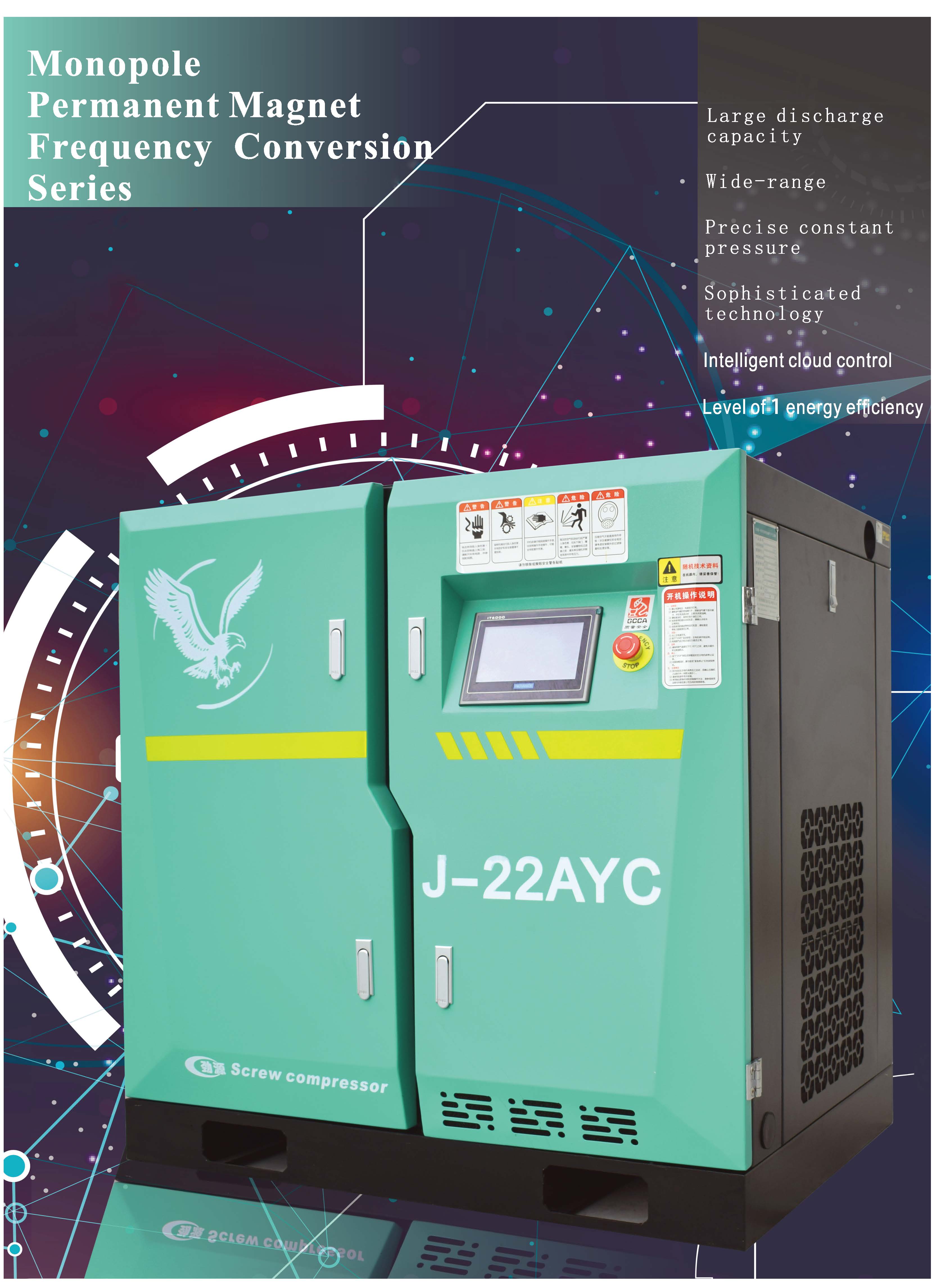
The oil circuit is very important in the air compression system, and many key components of the screw machine especially need lubricating oil to complete the lubricating oil to complete the bearing lubrication, system cleaning, shock absorption, sealing and conduction heat dissipation.
Analysis of components and problems of screw air compressor oil circuit system